


THOMAS’S LETTER:
Thomas wrote back within a few days. He said he had read Psalm 42 and cried, which surprised him because he had not cried in a long time. He did not know why the psalm had made him cry, but the crying felt like something.
He mentioned, almost as an aside, that he had not realised until he sat down with it that this was the psalm with the line he had known since childhood – as the deer pants for the water brooks, so pants my soul for you, O God. He said he had sung it as a song in youth group for years without ever noticing that the person who wrote it was not singing from a place of closeness. He was singing from a place of desperate distance. That realisation, he said, had broken something open in him. He asked me to explain what he should do about the flatness itself. Was there a practice? Was there a way to make it go away? He did not want a formula, he said, because he had tried formulas before and they had not worked. But he wanted to know whether there was something specific he could do...
Dear Thomas,
The crying is a good sign. I want to tell you that first. It is not a sign that you are sentimental, and it is not a sign that you are weak but a sign that something in you is still alive.
And I want to say something about what broke it open, because I do not think it was an accident.
You sang that psalm in youth group for years. As the deer pants for the water brooks and you knew the melody before you understood the meaning, the way most of us do with the songs we learned young. And then you sat down with it alone, quietly, and you saw for the first time that the man who wrote it was not writing from having arrived at a place of almost “desperate” intimacy but that he was writing from desperate distance. He was not describing what closeness to God feels like more so what the absence of it feels like, and what it means to keep reaching for God anyway, from the floor, with tears as his only food. You recognised something and the recognition undid you.
That is not weakness but the psalm doing exactly what it was written to do.
Tears are the body’s way of acknowledging what the mind has been trying not to acknowledge. When you cried over Psalm 42, your body was telling you what your mind had not yet put into words: I recognise this. I have been here and I am not alone here. The crying was an act of recognition, and recognition is the beginning of homecoming. Hold the tears gently for they are small letters from the true part of you to the other parts that have been on strike.
Now, to your question. You want to know what to do about the flatness. You have tried formulas and they have not worked and you want something specific that is not a formula. I want to honour this, because I think it is the right instinct, and most of the advice you have probably received has been some version of try harder or pray more or repent of whatever sin is blocking you. I do not think those answers are wrong exactly but they miss the shape of what is happening to you, and because they miss the shape, they cannot help.
Let me try to describe the shape. I am going to use a picture, and I am going to ask you to stay with it.
Imagine you have been walking through a landscape for a long time. The landscape was full of colour and weather and interesting things to see. You walked through forests and meadows and hills. You walked through mornings when the light was gold and the air was soft. You walked sometimes through storms that frightened you but that felt, in their own way, like being alive. The landscape was full of presence and the God you were walking with was there in the landscape, or maybe the landscape was there in Him, and the walking was what your life was.
And then, one day, you noticed the landscape had changed. Not suddenly but gradually. The colours began to mute. The weather went still. The forests started to look like sets of a forest, painted on flat boards. The hills were still there but they did not mean anything anymore. They were just hills. The air had lost its smell. The light had gone grey – not in an ominous way, but in a flat way, the way light looks under a fluorescent bulb in an empty office. You kept walking because you did not know what else to do. But the walking stopped feeling like walking. It started feeling like treading water with your feet on a conveyor belt.
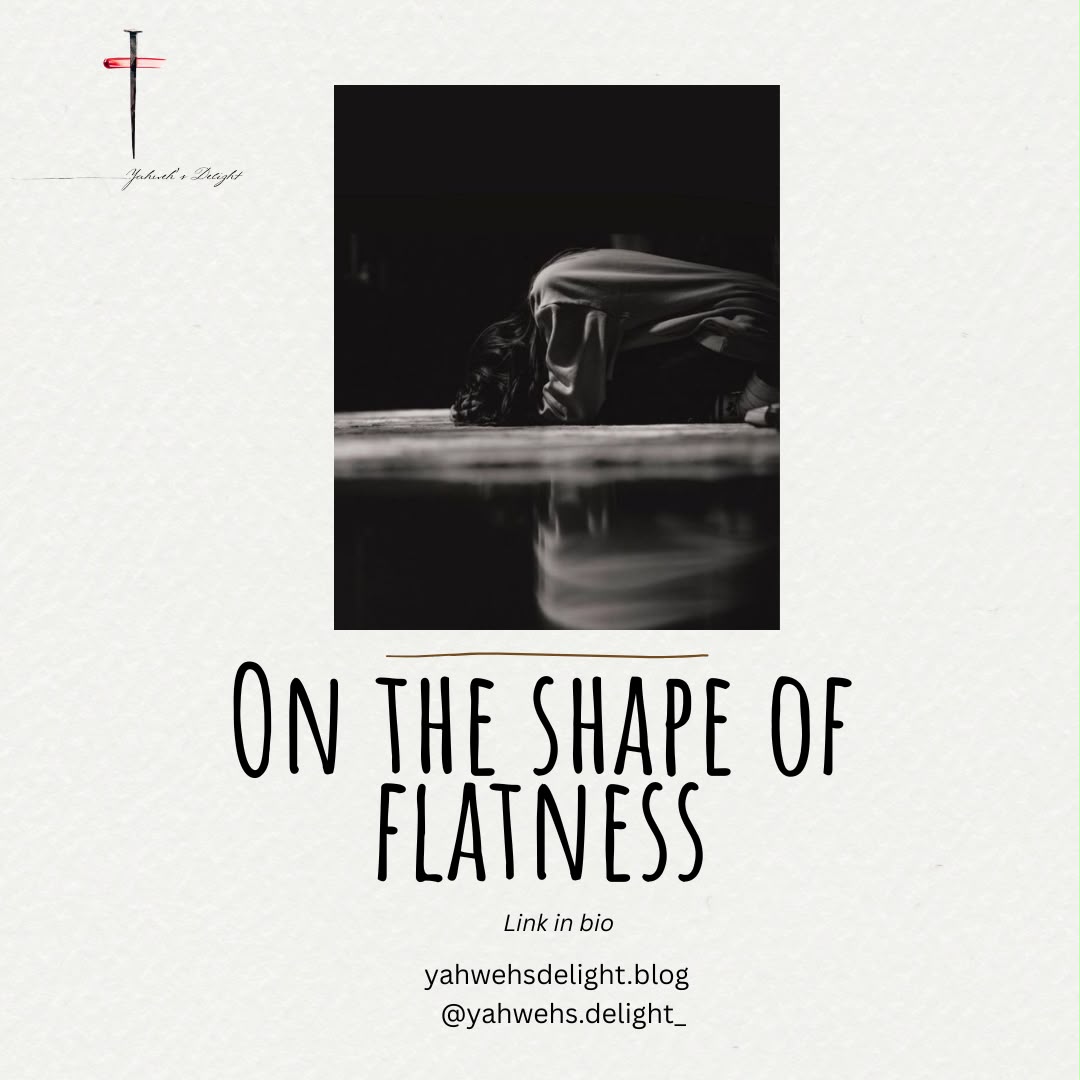
That is the shape of flatness. It is not the presence of something bad. It is the absence of something that used to be there. And the absence is strange, because you cannot point to anything missing. Nothing has been taken away. The forest is still there. God is, you believe, still there. But something about the way the whole scene connects to you has gone dim.
The reason formulas do not work on flatness is that formulas are for solving problems, and flatness is not a problem. It is a condition. A problem has a cause and a solution. A condition has a shape and a duration. You do not solve a condition. You live inside of it, attentively, until it shifts on its own because it always shifts eventually, and the shifting is not caused by anything you do. It is caused by the One who sends the weather.
What you can do while you are in it is this. I am going to give you a short list, and I am asking you to treat it as an invitation, not an assignment.
Show up anyway. Keep doing the things you used to do when you could feel them. Keep going to church, even when it feels like a waste of an hour. Keep opening the Bible, even when it feels like a phone book. Keep praying, even when it feels like speaking into a drawer. The reason is not that these things will fix the flatness – they will not. The reason is that they are the infrastructure of the walking life, and if you abandon the infrastructure during the flatness, you will have no infrastructure when it lifts. Keep the road. Walk it even when you cannot feel it under your feet.
Slow down whatever you are already doing. If you are reading the Bible, read less of it, more slowly. One verse, held in the mouth like a stone you are tasting, is better than ten chapters skimmed. If you are praying, pray fewer prayers, more slowly. Five words said with attention are better than five hundred words said on autopilot. The slowing down does not produce feelings. What it produces is a different quality of attention, and attention is what the dryness is starving for.
Let your body help. Take a walk outside without your phone and look at what is actually in front of you. A tree. A leaf. A cloud. A bird. Let the looking be a kind of prayer. You do not have to say anything. You do not have to think anything spiritual. Just look. The world is full of the glory of God, and the glory does not require your good mood to keep being glory. Some days, when you cannot feel it, you can still see it. And the seeing is a form of worship even if it does not come with any inner reverberation.
Stop monitoring yourself so closely. When you are in flatness, there is a strong temptation to check constantly for signs of change. Do I feel anything yet? How about now? This kind of self-monitoring makes the flatness worse, because it turns your attention inward and traps you in your own emptiness. You cannot find God by staring into yourself looking for the effects of His presence. You find Him by looking outward at Him, at the world He made, at the people He has put around you.
Talk to someone. I am glad you are talking to me, but I am a stranger on the internet, and I am not a substitute for the people who could sit next to you in person. Find one person that you can tell the truth to. Not a whole small group. One trustworthy Christian who can meet you for a walk and let you say, out loud, what you have written to me. If you do not have that person yet, start praying for one. God sends people, in my experience, when we ask Him for them.
One more thing, and then I will stop.
The God you are trying to find is looking for you harder than you are looking for Him. He is not hiding. He is not withholding on purpose to test your commitment. The flatness is not a trick. It is a season, and He is in the season with you.
The longing to find Him is His gift. Nobody longs for the living God who has not already been touched by Him. The touch is what causes the longing. And the longing, though it feels like absence, is a form of presence. It is Him, in you, pulling you toward Himself. You are not alone in your search. You are accompanied by the One you are searching for.
Let that sit.
Write when you can
Subscribe to receive an email when I post Letter Three: On Doubting Yourself Into the Ground.
Or start from the beginning with the series introduction.
Leave a Reply